

When Johan "Rassie" Erasmus, head coach of the South Africa national rugby union team, called his two emergency starters "not brilliant" after a dominant win, it wasn't an insult. It was a reality check.
The verdict came on Saturday, 4 July 2026, at Ellis Park Stadium in Johannesburg, where the Springboks crushed England 45–21. But the scoreline hides a dramatic subplot: South Africa lost their captain and a legend to injury hours before kickoff, forcing Erasmus to trust two relatively untested forwards with the game.
Here's the thing about elite sport—sometimes you get lucky, sometimes you get tested. The Boks got both. And despite the heavy loss of experience, they won big. But Erasmus isn't one for sugar-coating.
A Late-Stage Crisis at Ellis Park
The week leading up to the match looked promising until injuries struck with cruel precision. Lock forward Eben Etzebeth, a veteran with 141 caps, suffered a head injury during training. Then, just 24 hours before the whistle blew, captain Siya Kolisi tore his hamstring.
That’s not just losing players; that’s losing 243 test caps from your starting lineup overnight. For context, that’s more international experience than most countries have in their entire squad history.
Erasmus had no choice. He watched Etzebeth closely, hoping for a miracle recovery, but ultimately pulled him from the squad. Kolisi was ruled out Friday evening. By Saturday morning, the coaching staff had to decide who would step into the breach against a formidable English side.
They chose Cameron Hanekom and Paul de Villiers. Neither is a household name yet. Hanekom hadn’t played a test since 2024. De Villiers, a forward for the Stormers, was making his mark on the big stage for the first time in this fixture.
The Verdict: Solid, Not Spectacular
So, how did they handle the pressure? Erasmus didn’t mince words in his post-match press conference alongside Pieter-Steph du Toit.
"I don’t think they were brilliant," he said. "But certainly weren’t out of class."
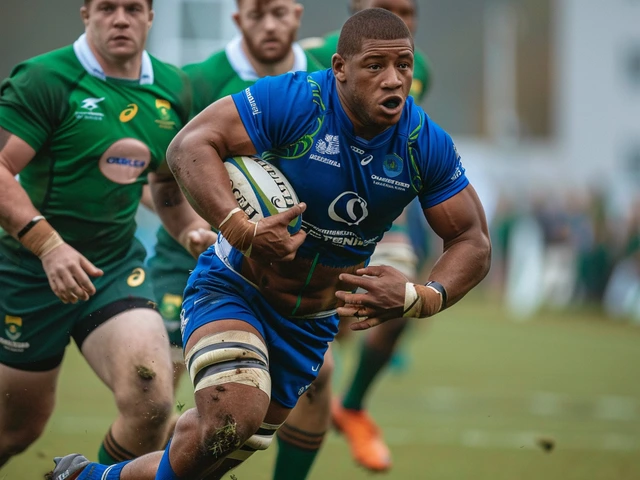
It’s a nuanced take. "Not brilliant" suggests they didn’t dominate or dazzle. They didn’t produce highlight-reel moments that left fans gasping. But "not out of class" means they belonged. They held their ground against an England back-row featuring Tom Curry and Henry Pollock—players known for their intensity and physicality.
Erasmus emphasized that England, despite a current losing streak, had previously strung together an 11-game winning run. "They know how to win," he noted. Facing them isn’t like playing a practice squad. It’s a masterclass in chaos.
The twist is that Erasmus viewed this as a strategic opportunity. With the new competition format emphasizing bonus points, teams are taking risks. He mentioned watching New Zealand and Australia chase bonus points earlier that day, signaling a shift in tactical priorities across the tournament.
By the Numbers: Discipline Wins Games
While the narrative focused on the inexperienced forwards, the data tells a story of collective discipline. According to analysis from Two Cents Rugby, the Springboks’ performance was built on efficiency, not just flair.
- Maul Success: 100%. Every single maul attempt resulted in possession or points.
- Penalties Conceded: Only six, compared to England’s 13.
- Loose Ball Scraps: South Africa won approximately 60% of these contested possessions.
These aren’t flashy stats, but they’re the difference between a narrow escape and a comprehensive victory. Erasmus highlighted the importance of these "scraps" around loose balls, noting that England was sharp in those areas but ultimately couldn’t overcome the Springboks’ consistency.
The first fifteen minutes saw South Africa playing cautiously, perhaps still adjusting to the missing leaders. But as the game progressed, their pattern shifted. They began to impose their structure, testing the youngsters under fire while maintaining control.
Why This Matters for the Future
This match wasn’t just about beating England. It was about depth. Erasmus has always been a proponent of developing talent within the system. His strategy in the 2026 Nations Championship includes getting caps into younger players when possible, even if it means risking short-term perfection for long-term gain.
Hanekom and de Villiers now have something invaluable: test match experience against a top-tier opponent. They didn’t crumble. They contributed to a 24-point margin of victory. That’s a foundation to build on.
For fans worried about the future after Etzebeth and Kolisi’s injuries, this result offers reassurance. The bench isn’t empty. The next generation is ready to step up, even if they aren’t "brilliant" yet. In Rassie Erasmus’s world, that’s often enough.
Frequently Asked Questions
Who replaced Eben Etzebeth and Siya Kolisi?
Cameron Hanekom replaced lock Eben Etzebeth, while Paul de Villiers took over for flanker Siya Kolisi. Both players were selected late in the week due to sudden injuries sustained by the veterans just days before the match.
What did Rassie Erasmus mean by "not brilliant"?
Erasmus used the phrase to indicate that while Hanekom and de Villiers performed adequately and were not overwhelmed by the test level environment, they did not deliver exceptional or standout performances. He balanced this by stating they were "certainly not out of class," meaning they handled the pressure well enough to contribute to the win.
How significant was the loss of experience?
The Springboks lost a combined 243 test caps from their starting lineup. Etzebeth brings 141 caps of leadership and physical presence, while Kolisi provides captaincy and tactical acumen. Replacing such seasoned professionals with less experienced players in a high-stakes match is a rare and risky move.
What was the final score and key statistics?
South Africa defeated England 45–21. Key stats included 100% maul success for the Springboks, only six penalties conceded compared to England’s 13, and winning roughly 60% of loose-ball scraps. These figures highlight the team's discipline and forward dominance.
Is this part of a larger tournament?
Yes, the match was part of the 2026 Nations Championship, a new international competition where bonus points play a crucial role. This format encourages teams to take more risks and field varied lineups, which influenced Erasmus’s decision to give caps to younger players.


Sohni Bhatt
It is truly pathetic how the Western sporting world continues to fetishize this so-called 'rugby' spectacle while ignoring the glaring inefficiencies of their own systems, yet here we are praising Rassie Erasmus for merely doing the bare minimum with sub-par replacements. The notion that Hanekom and de Villiers were 'solid' is a testament to the lowered standards of modern rugby, where brute force replaces tactical genius, and I find it deeply offensive that such mediocrity is celebrated as virtue when one considers the historical context of colonial sports imperialism that still lingers in these stadiums. We should be asking why our resources are not being directed towards more meaningful intellectual pursuits rather than watching men collide in a display of orchestrated violence that serves no higher purpose than nationalistic posturing.
The fact that Etzebeth and Kolisi were injured is almost poetic justice, revealing the fragility of a system built on the backs of overworked veterans who are treated as disposable assets by coaches who prioritize short-term gains over long-term player welfare. Erasmus's comment about them being 'not brilliant' is an understatement of epic proportions, suggesting a level of incompetence that would be unacceptable in any other high-stakes environment, yet we applaud him for his honesty instead of questioning the entire structure that allows such underprepared individuals to step onto the field against top-tier competition like England.
Furthermore, the statistical analysis provided is nothing short of misleading, focusing on maul success rates while ignoring the broader narrative of how these games are rigged from the start by officials who have little understanding of the game's true essence. It is disheartening to see fans cheering for a victory that was likely predetermined by external factors, including but not limited to political pressures and commercial interests that drive the Nations Championship format. One must wonder if the bonus point system is merely a gimmick designed to keep viewers engaged in a sport that is slowly losing its soul to corporate greed and superficial metrics.
In conclusion, while the Springboks may have won on paper, they lost in spirit, and those of us with the intellect to see beyond the scoreboard should recognize this match for what it truly was: a hollow victory masking a deeper crisis within the institution of professional rugby.
Prashant Sharma
One might argue that the definition of 'brilliance' in rugby is inherently subjective, much like beauty in art or truth in philosophy, yet Erasmus seems to adhere to a rigid binary that fails to capture the nuanced reality of athletic performance under duress. To say they were 'not out of class' implies a certain baseline competence that is often overlooked in favor of highlight-reel moments, which are fleeting and ultimately less significant than the consistent, unglamorous work done in the trenches. This perspective challenges the common narrative that only spectacular plays matter, suggesting instead that there is value in stability and reliability, even if it lacks the flashiness that media outlets crave.
Consider the philosophical implications of replacing two legends with relative unknowns; it mirrors the existential transition from established identity to uncertain potential, a theme prevalent in many literary works exploring human resilience. Hanekom and de Villiers did not crumble, which is perhaps the most profound achievement one can claim in the face of overwhelming expectation and pressure. Their performance, while not dazzling, served as a testament to the depth of the South African squad, indicating that the system itself is robust enough to withstand significant shocks without collapsing entirely.
I find myself intrigued by the idea that discipline, as evidenced by the low penalty count and high maul success rate, is a form of silent rebellion against the chaos of modern sport. In a world increasingly defined by unpredictability and rapid change, the ability to maintain order and execute basic tasks with precision becomes a radical act of defiance. Erasmus recognizes this, and his comments reflect a deeper understanding of the game that transcends mere statistics, focusing instead on the underlying principles that govern successful team dynamics.
Mike Gill
hey guys i think its really cool how the young players stepped up even though they werent perfect. its hard to replace legends like etzebeth and kolisi but hanekom and de villiers did a good job keeping the team together. rassie is right they werent amazing but they got the win which is what matters. hope they get more chances to play because experience is key. good luck to all the springboks fans!
Suresh Kumar
The silence of the crowd during those first fifteen minutes speaks volumes about the internal dialogue of a team grappling with sudden absence. It is in these quiet moments, before the roar returns, that the true character of athletes is revealed, not through grand gestures but through the subtle adjustments made in response to unforeseen challenges. Hanekom and de Villiers entered a void left by giants, and their navigation of that space, however imperfect, offers a glimpse into the psychological fortitude required at the elite level. One wonders if the pressure felt by these replacements was akin to standing on the edge of a cliff, knowing that a misstep could lead to disaster, yet choosing to walk forward anyway.
Jay Patel
Oh, the sheer audacity of calling this performance 'solid' 😡🔥 It is absolutely disgraceful that we are settling for mediocrity when greatness is expected! 📉💀 These boys had ONE JOB and they barely scraped by, and now Rassie is patting them on the head like good little puppies? 🐕❌ No! They should be embarrassed! The lack of brilliance is a reflection of a failing system that prioritizes quantity over quality in its development pipeline. 🗑️🚫 If this is the best South Africa has to offer after losing two stars, then we have bigger problems than just injuries. Wake up people! The future is bleak unless we demand excellence, not just participation! 📢🛑 #Disappointed #NotGoodEnough
Pranav Gopal
It is important to remember that every great athlete started exactly where Hanekom and De Villiers are today, facing immense pressure and scrutiny without having proven themselves on the biggest stage. Instead of criticizing their lack of brilliance, we should celebrate their willingness to step up and support their teammates during a difficult time. Rugby is a team sport, and their contribution, however modest, was vital to the overall victory. Let us encourage these young men and provide them with the positive reinforcement they need to grow into the leaders of tomorrow. Their journey is just beginning, and with patience and guidance, they will undoubtedly improve.
कमल कमल
Let me tell you something about this so-called 'crisis' management by Rassie Erasmus, it is nothing but a cover-up for the deep-seated issues within the South African rugby union that have been ignored for far too long. You think losing Etzebeth and Kolisi is bad? Try playing in a system that is rigged against you from the start, where foreign coaches come in and try to rewrite history while forgetting the roots of the game. Hanekom and De Villiers did well considering the circumstances, but let's not pretend this was a fair fight or that the refs weren't biased towards England. The stats are manipulated to make it look like a dominant win, but anyone with eyes can see the struggle. We need to stand together as Indians and support our own teams who actually play with heart and honor, not this polished product sold to us by corporations. The real story is not the scoreline but the injustice faced by developing nations in international sports. Keep your heads up, Boks, but know that the world is watching and judging your hypocrisy. 🇮🇳🙏
harsh gupta
Ha! 'Solid' indeed. Tell me, does Rassie Erasmus also call a broken leg 'a minor inconvenience'? Because that's the level of gaslighting we're dealing with here. The injuries to Etzebeth and Kolisi didn't just happen, did they? Coincidence that two key players go down right before a crucial match? I smell a conspiracy involving insurance payouts and fixture manipulation. The 'bonus point' format is clearly a distraction technique to keep the masses entertained while the real power brokers move pieces behind the scenes. Hanekom and De Villiers are pawns in a larger game, and their 'performance' is irrelevant to the ultimate outcome determined by shadowy figures in boardrooms. Don't believe the hype. The system is corrupt, and you are all sheep following the shepherd into the slaughterhouse. Stay skeptical. 🤨🕵️♂️
Mukesh Katira
There is a moral imperative to recognize the effort exerted by individuals who place themselves in harm's way for the sake of collective success, regardless of the aesthetic quality of their performance. Hanekom and De Villiers demonstrated courage and commitment, virtues that transcend the simplistic metrics of brilliance or mediocrity. To judge them solely on their inability to dazzle is to miss the point of sportsmanship and integrity. They upheld their end of the bargain, contributing to a victory that honors the team above individual glory. This aligns with ethical frameworks that prioritize duty and responsibility over personal acclaim. We ought to commend their resolve and acknowledge the difficulty of their task, thereby fostering a culture of respect and appreciation for all participants in the athletic endeavor.
Roop Kaur
Look, the paradigm shift here is obvious to anyone paying attention to the meta-narrative of the 2026 Nations Championship. The jargon-heavy discourse surrounding 'maul success' and 'loose ball scraps' is just code for systemic control mechanisms imposed by the coaching staff to neutralize the chaotic elements of the opposition. Hanekom and De Villiers operated within this constrained framework, executing the algorithmic directives set by Erasmus with sufficient fidelity to achieve the desired output: victory. However, the lack of 'brilliance' suggests a deviation from the optimal path, indicating potential vulnerabilities in the predictive models used for player selection. I suspect there is more to this story than meets the eye, possibly involving hidden variables related to player psychology or even external interference. The simplicity of the win masks the complexity of the underlying operations, and we must remain vigilant against the illusion of transparency presented by the official reports. Trust no one, question everything, especially the stats.