
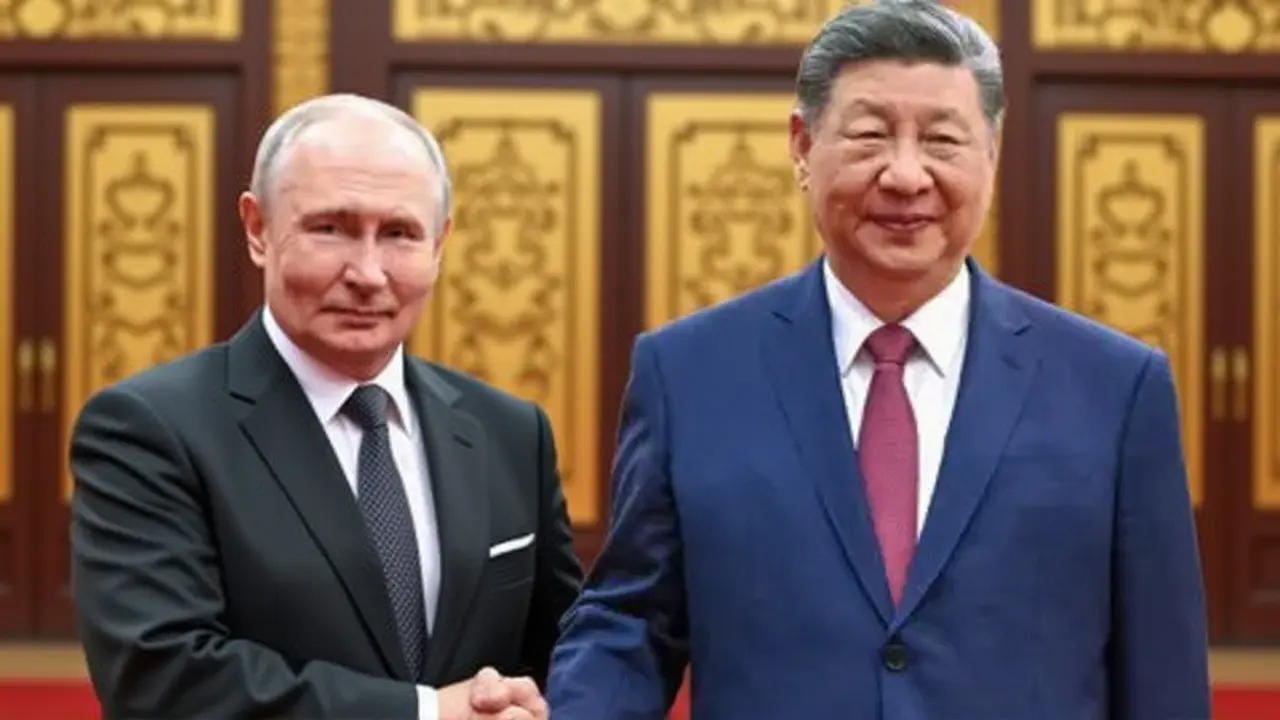
It’s a delicate balancing act, and Xi Jinping, President of China is standing right at the center of it. On May 20, 2026, the Chinese leader hosted a grand welcoming ceremony in Beijing for Vladimir Putin, President of Russia. The event wasn’t just about red carpets and military honors; it was a high-stakes signal to the world that Beijing remains firmly committed to its strategic partnership with Moscow.
Here’s the twist: this visit comes just days after Xi welcomed Donald Trump, President of the United States to the same city. Back-to-back state visits from the leaders of the two superpowers? That’s rare. It places China in an unusual position as the primary diplomatic hub for global powers who are often at odds elsewhere.
A Diplomatic Tightrope Walk
The timing is what has analysts leaning forward in their seats. By hosting both Washington and Moscow within such a short window in May 2026, Beijing is demonstrating what commentators are calling its "pivotal role in global diplomacy." It’s not enough to just be a player; China wants to be the table where the game is played.
But maintaining stable relations with the United States while preserving strong ties with Russia is no small feat. The stakes are incredibly high. If Beijing leans too far toward Moscow, it risks alienating American partners. Lean too hard toward Washington, and it might lose its most reliable energy supplier and political ally in the face of Western sanctions. This two-day visit by Putin is being closely watched because every handshake and joint statement will be dissected for clues on where China stands.
Trade, Energy, and Key Wins
So, what’s actually on the menu beyond the ceremonial tea? According to insiders and broadcast commentary, Putin isn’t just here for photo ops. He’s looking to extract "key wins" in specific sectors. Trade and energy are the big ones.
Russia needs markets for its oil, gas, and other commodities more than ever before due to ongoing geopolitical pressures. China, meanwhile, needs secure, affordable energy sources to fuel its economy. The discussions between Xi and Putin are expected to cover:
- Bilateral trade agreements that could bypass traditional financial systems.
- New or expanded energy projects linking Russian resources to Chinese infrastructure.
- Broader bilateral ties that reinforce political support on the international stage.
One presenter noted during the coverage that Putin would be keen to "bolster ties with Beijing" while securing these economic advantages. It’s a pragmatic exchange: security and political alignment for market access and investment.
The Symbolism of the Tea Ceremony
If the welcome ceremony was about power, the conclusion of the visit was about tradition. As the two-day trip wrapped up, Xi and Putin joined forces for what was described as a "lavish" and "elaborate" tea ceremony in Beijing.
In Chinese culture, sharing tea is a gesture of respect, friendship, and harmony. Choosing this format for the final meeting suggests a desire to frame the relationship as enduring and culturally deep, rather than purely transactional. It’s a soft-power move designed to contrast with the harder edges of geopolitical maneuvering. The imagery of the two leaders sitting together over tea provides a calm counter-narrative to the tense headlines dominating global news cycles.
What This Means for Global Geopolitics
This visit reinforces the trend of a multipolar world order where alliances are shifting. The fact that Donald Trump visited first adds another layer of complexity. It suggests that China is attempting to mediate or at least manage the friction between the US and Russia, positioning itself as a stabilizer.
However, observers remain cautious. While the rhetoric is warm, the actual policy shifts may be subtle. No specific financial figures or new treaty dates were announced in the immediate aftermath, which is typical for high-level summits that focus on setting the tone rather than signing binding contracts on the spot. The real work happens behind closed doors in the months that follow.
For now, the message from Beijing is clear: we are open for business with everyone, but our foundational partnerships remain intact. Whether that balance can hold as global tensions rise remains the biggest question mark hanging over the region.
Frequently Asked Questions
Why is the timing of Putin's visit significant?
The visit occurred just days after US President Donald Trump met with Xi Jinping in Beijing. This back-to-back scheduling highlights China's attempt to maintain balanced relationships with both major global powers, showcasing its pivotal role in international diplomacy during a period of heightened geopolitical tension.
What are the main topics of discussion between Xi and Putin?
Key areas include bilateral trade, energy projects, and strengthening political ties. Putin is reportedly seeking "key wins" in energy exports and trade agreements, leveraging Russia's resources to meet China's demand for secure supply chains amidst global instability.
What was the purpose of the tea ceremony?
The lavish tea ceremony served as a symbolic capstone to the visit, emphasizing cultural friendship and long-term harmony. In Chinese diplomatic tradition, such gestures soften the image of hard political negotiations and reinforce the personal bond between the two leaders.
How does this affect China-US relations?
Beijing aims to maintain stable relations with the United States while preserving its alliance with Russia. This dual approach allows China to avoid direct confrontation with the US while ensuring it has a reliable partner in Moscow, though it requires careful diplomatic navigation to prevent alienating either side.


Gaurav sharma
Let's cut the crap about 'diplomatic balancing.' It is absolutely pathetic how these leaders play chess with human lives while sipping fancy tea. Xi Jinping is just trying to look like a benevolent god while he feeds Russia's war machine. The West calls it nuance, I call it moral bankruptcy wrapped in silk robes.
Megha Khairnar
I see this differently. The tea ceremony is not just a photo op; it is a profound statement of cultural continuity amidst chaos. In our traditions, sharing tea signifies trust that transcends immediate political grievances. Perhaps we should focus on the symbolism of harmony rather than dissecting every handshake for hidden agendas. Peace requires patience, not just pressure.
Twinkle Vijaywargiya
You are both missing the bigger picture here!! China is essentially becoming the global referee!! This is huge for international trade stability!! We need to appreciate the effort being made to keep channels open between superpowers!! It is not easy!! But necessary!!
Swetha Sivakumar
I'm just watching from the sidelines honestly. It feels like everyone is overanalyzing the seating arrangements and the type of tea served. As long as energy prices stay stable for regular folks, I don't care who shakes hands with whom first. Let them have their moment.
diksha gupta
The imagery of the two leaders sitting together is quite poetic actually. It contrasts so sharply with the usual tension we see in news headlines. There is something calming about the ritual itself, even if the underlying politics are complex. Maybe that soft power approach is exactly what is needed right now to cool things down.
Sai Krishna Manduva
One must consider the philosophical implications of such a visit. Is it truly balance, or is it merely the illusion of choice? When one side relies on the other for survival, can there be any real neutrality? The concept of a 'pivot' is often a misnomer for strategic dependency disguised as diplomatic flexibility.
Siddharth SRS
It is imperative to recognize the sheer magnitude of the economic exchanges occurring beneath the surface of these ceremonial events. The bilateral trade agreements mentioned are not mere formalities but foundational shifts in the global financial architecture. One cannot underestimate the long-term ramifications of bypassing traditional financial systems for resource security. The silence regarding specific figures is deliberate and calculated.
Anoop Sherlekar
This is amazing progress! 🚀 The world needs more cooperation like this! Let's hope this leads to better opportunities for everyone! Keep pushing forward! 💪
Navya Anish
Boring! Typical propaganda piece. They pretend to be friends while stabbing each other in the back. India watches this circus and laughs because we know who really holds the cards. Stop pretending this tea party solves anything. It is all theater for the masses.
Subramanian Raman
I wonder how the average citizen in both countries perceives this meeting? Do they feel safer, or do they feel like pawns in a larger game? It would be interesting to hear from people on the ground rather than just analysts. Empathy seems lost in these high-level discussions. 😔
Shreyanshu Singh
look at the way they smile... fake as hell. Putin looks tired and Xi looks like he owns the place. the whole thing is scripted. nobody believes this peace talk stuff. its just buying time before the next crisis. typical.
Sohni Bhatt
Only those who understand the intricate web of geopolitical strategy can grasp the true significance of this event. The casual observer sees a tea ceremony; the informed analyst sees the consolidation of a new world order where Western hegemony is quietly dismantled. It is a masterclass in soft power projection, demonstrating that cultural rituals can be weaponized for diplomatic dominance without firing a single shot.
Prashant Sharma
The narrative of 'balance' is fundamentally flawed when examined through a contrarian lens. China is not mediating; it is positioning itself as the indispensable hub for a fractured world. By hosting both adversaries, Beijing asserts its centrality. The lack of binding contracts is not a failure but a feature, allowing maximum ambiguity to serve future strategic interests.