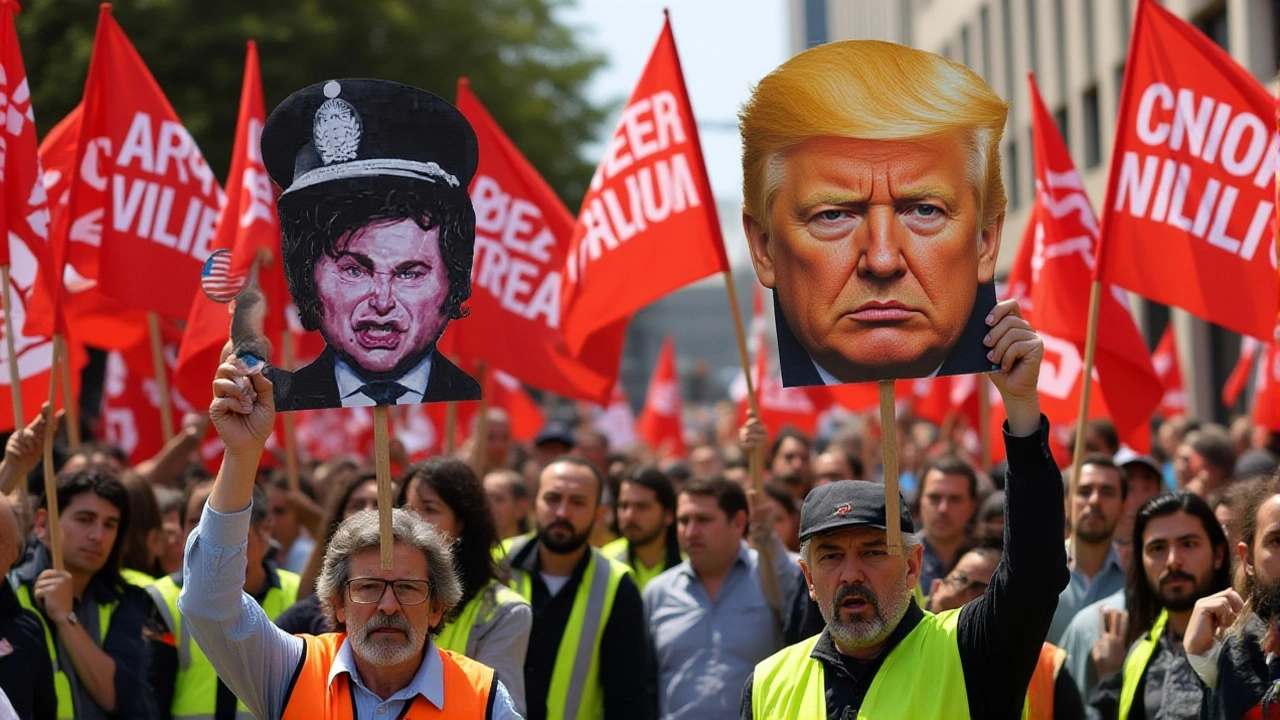
Javier Milei
When Javier Milei, an Argentine economist and politician known for his fiery libertarian views and dramatic public style. Also known as "The Chainsaw", he became president of Argentina in December 2023, he didn’t just win an election—he ignited a national reckoning. His rise wasn’t built on traditional politics. It was built on anger over inflation that hit over 200%, a collapsed peso, and a generation tired of broken promises. Milei didn’t promise tweaks. He promised to burn the system down and rebuild it with free markets, zero currency controls, and a gutted public sector.
His movement is part of a global wave of populism, a political approach that pits ordinary people against corrupt elites, but with a twist. While many populist leaders lean left, Milei is a hard-right libertarian. He admires Ron Paul, quotes Milton Friedman, and calls central banks a fraud. He doesn’t just want to reduce government spending—he wants to eliminate entire ministries. His plan to dollarize Argentina’s economy isn’t just economic policy; it’s a symbolic strike against decades of mismanagement. This isn’t theory for him. It’s survival. And he’s not afraid to say so, even if it means yelling at Congress or waving a chainsaw on live TV.
His influence reaches beyond borders. When he speaks at international forums, he’s not just representing Argentina—he’s speaking for millions who feel abandoned by mainstream parties. His allies include figures like Donald Trump and Viktor Orbán, not because they share a party, but because they share a rejection of the status quo. Meanwhile, critics warn his policies could deepen poverty in the short term, even if they promise long-term stability. The truth? No one knows exactly how it will play out. But one thing’s clear: economic reform, the radical restructuring of a nation’s financial and fiscal systems under Milei is being watched by every country facing similar crises—from Brazil to South Africa.
What you’ll find here are stories that track his impact: how his policies ripple through global markets, how his rhetoric fuels political movements, and how everyday Argentines are navigating life under his rule. These aren’t just headlines. They’re snapshots of a country being remade—in real time.