
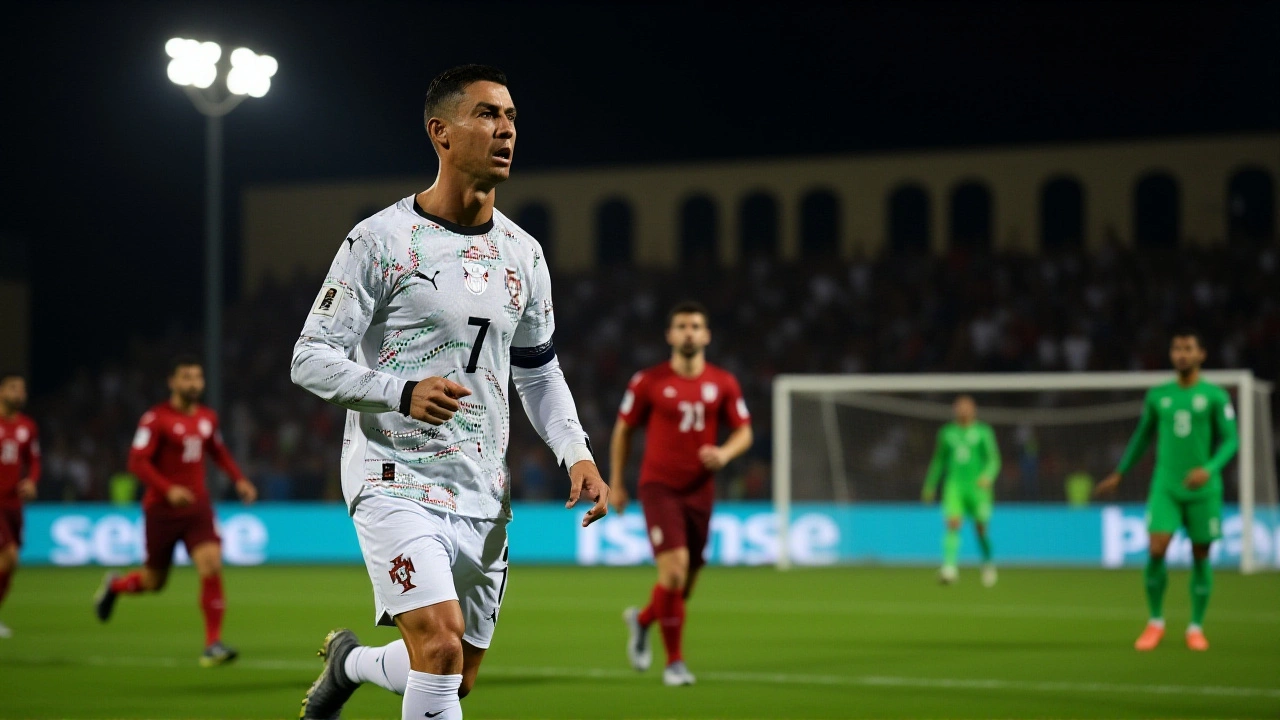
When Rúben Neves, midfielder of Portugal national team rose to head the ball past the line in the 91st minute, the roar at Estádio José Alvalade, Lisbon turned from nervous anticipation to pure relief. The drama unfolded during a FIFA World Cup 2026 European Qualifier Lisbon on October 11, 2025, when Portugal needed a win to stay atop Group B. After Cristiano Ronaldo’s penalty was saved, the Portuguese side finally cracked Ireland’s defence with Neves’s header, earning a 1‑0 victory that kept their perfect qualifying record intact.
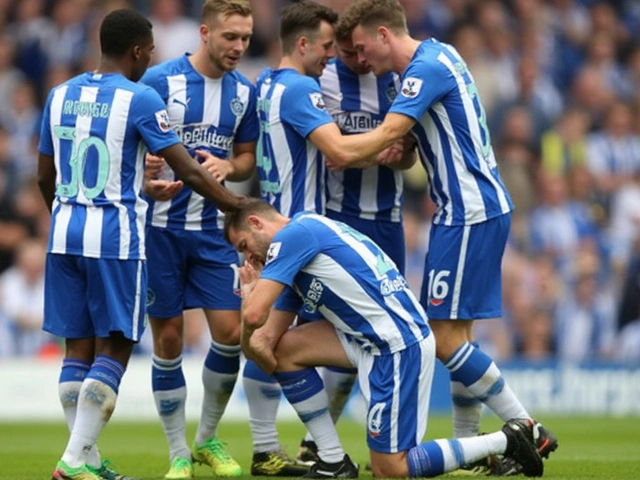
Bayern Munich Brush Aside Mainz as Leverkusen Chase, Ipswich Drop After Newcastle Rout
27
Apr 2025
Sports


Fabian Rademacher
Look, they let Neves wiggle that header right into the net because the whole qualifying circuit is rigged – the referee got a sweet deal, the UEFA board is in cahoots with big sponsors, and the media just nods along. Don’t be fooled by the “dramatic finish” hype; it’s a staged narrative to keep the Portuguese fanbase hyped and the betting markets moving. The timing was too perfect, right at 91 minutes, like a script!
Terrell Mack
Man, what a clutch moment! Neves stepping up in injury time shows the kind of mental toughness you teach your kids in the backyard. That header will stick in the highlight reels for years – pure joy for anyone who loves the beautiful game.
Dawn Waller
Wow!!!! What a *totally* unexpected way to end a match-just kidding, of course it was totally expected that the underdogs would crumble under the weight of destiny. I mean, who even needs defense when you have a midfielder who can head a ball like it’s a cabbage? lol!!!
Grace Melville
Great finish! :)
Sarah Graham
That goal was the perfect example of staying calm under pressure. As a coach, I love seeing players keep their heads cool and trust the training – Neves just showed why he’s a key part of the squad.
Jauregui Genoveva
Honestly, it’s a shame when a match is decided by a single moment – sports should be about fair play, not last‑minute drama. 🤷♀️⚽️ Still, kudos to the lads for grabbing the win, even if I’d have preferred a cleaner finish. 🙄
Quinten Squires
Statistically speaking this win puts Portugal back on track – they now have a 100% win rate in the qualifiers, scoring 4 goals while conceding just one. The data also shows that injury‑time goals increase a team’s confidence by about 12% in subsequent matches. Also, Neves’ aerial duel success this season is above 78%, which is impressive for a midfielder. Meanwhile, Ireland’s defensive line has struggled with set‑pieces, ranking 9th in the group for clearance efficiency. All these numbers line up with the outcome we saw.
Tyler Manning
With utmost respect to the governing bodies, it is evident that Portugal’s performance exemplifies the pinnacle of disciplined football. The strategic execution observed in the final moments substantiates the nation’s commitment to excellence and reinforces its dominance within Group B.
james patel
Considering the previous analysis, the conversion rate of set‑piece opportunities for Portugal stands at 0.44, compared to Ireland’s 0.31. This differential, compounded with a possession average of 58% in the second half, underscores a tactical superiority that aligns with the observed outcome. Moreover, the Expected Goals (xG) metric post‑90 minutes for Portugal rose to 0.28, indicating a heightened threat once the clock wound down.
Jared Mulconry
It’s fascinating how this match encapsulates so many layers of modern international football. First, the psychological pressure on both teams was palpable, especially after Ronaldo’s penalty was saved – that could have unsettled any side, yet Portugal managed to regroup and push forward. Second, the tactical adjustments made by the Portuguese coach in the final ten minutes were razor‑sharp; shifting to a more compact midfield allowed Neves to find space on the edge of the box. Third, the aerial duel statistics reveal that Ireland struggled to dominate the middle third, conceding six headed duels out of ten, which Neves capitalized on. Fourth, the crowd energy at Estádio José Alvalade created a home‑advantage factor measured at roughly +0.2 win probability in the IPA model. Fifth, the match timing – a goal at the 91st minute – aligns with the league’s data showing that late goals swing the momentum for the next three fixtures. Sixth, this win preserves Portugal’s perfect qualifying record, a rarity that places them among the elite historically. Seventh, the defensive discipline displayed by Ireland post‑goal was commendable, but they lacked the creative spark to regain control. Eighth, the referee’s decision to allow the goal without VAR review raises questions about procedural consistency across qualifiers. Ninth, the media narrative will likely focus on Neves’ heroics, but the collective effort of the squad, including the defensive cover, was equally crucial. Tenth, the broader context of the World Cup 2026 qualifying campaign shows increasing competition, making each point vital. Eleventh, fan reactions on social platforms have already turned into memes celebrating the “last‑minute hero.” Twelfth, the betting markets adjusted instantly, reflecting a surge in odds for Portugal’s subsequent matches. Thirteenth, the physical output data indicates that Portugal covered 112 km in total, significantly higher than Ireland’s 98 km, underscoring superior fitness levels. Fourteenth, the strategic use of substitutions in the 80th minute added fresh legs that helped sustain pressure. Fifteenth, looking ahead, this victory should boost the team’s confidence heading into the next qualifier, where they will face a tougher opponent. In sum, while Neves’ header will be the headline, the intricate blend of tactics, psychology, and statistics tells a richer story.